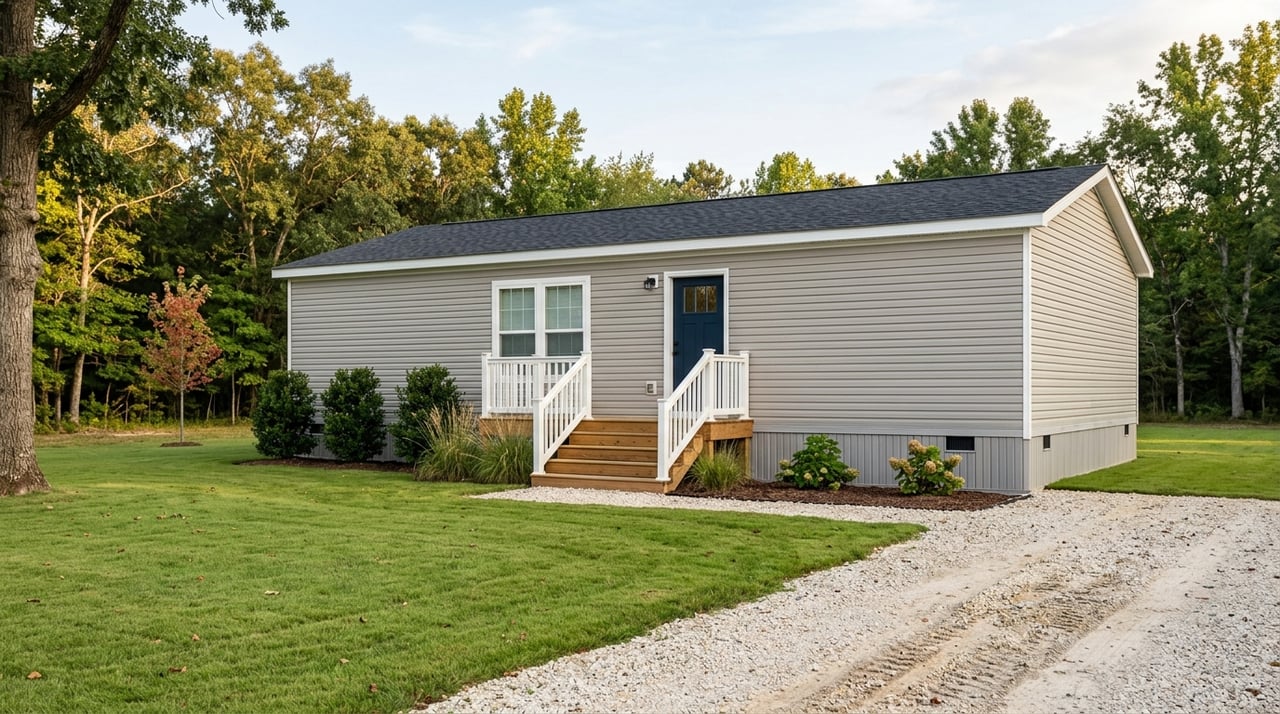
Thinking about buying a manufactured home or a rural property near Alamo, Tennessee? You are not alone, and you are smart to slow down before you make an offer. These homes can open the door to more land, more flexibility, and a better fit for your budget, but they also come with a few extra details that can affect financing, permits, and long-term value. This guide will walk you through the biggest issues to check so you can move forward with more confidence. Let’s dive in.
Why rural and manufactured homes are different
When you buy near Alamo, you are often buying more than just the home itself. You may also be buying acreage, a private well, a septic system, a long driveway, and land that falls under different zoning rules depending on the exact location.
That matters because manufactured and rural home purchases are often shaped by four key factors: zoning, title status, financing type, and site conditions. If any one of those pieces does not line up, it can affect your loan options, your inspections, or even whether the property works for your plans.
Check whether the property is in Alamo or county rules
One of the first things to confirm is whether the property sits inside Alamo town limits or in the broader Crockett County planning area. That distinction matters because zoning and permitting can be handled differently depending on where the parcel is located.
Crockett County points building-permit questions through the County Clerk’s office and directs buyers to county zoning documents. Before you get too far into a deal, it is worth confirming which rules apply to the parcel you want to buy.
Crockett County zoning can change your options
Crockett County uses different zoning districts for different property types. In the FAR district, single-family dwellings and mobile homes are allowed on 1-acre lots. In the R district, single-family dwellings and manufactured residential dwellings are allowed, but mobile homes and mobile home parks are not.
In the R-MH district, individual mobile homes and mobile home parks are allowed, but there may be added site-plan review requirements. The county also treats flood hazard areas as a separate zoning district, which is another reason to verify the exact parcel before you commit.
Outbuildings matter on rural acreage
If you are shopping for land with a barn, shop, or other outbuilding, zoning matters there too. Crockett County treats agricultural buildings on land devoted to agricultural use differently from standard residential zoning.
That does not mean every structure is automatically fine. It means you should ask clear questions early if the property includes extra buildings or if you plan to add them later.
Know the difference between manufactured, mobile, and modular
These terms often get used like they mean the same thing, but they do not. That can create confusion during financing, title work, and zoning review.
HUD says a manufactured home is built to the federal HUD Code, has a permanent chassis, and carries a certification label on each transportable section. Tennessee also distinguishes factory-manufactured homes from modular homes, noting that modular homes do not have a permanent chassis.
Crockett County goes a step further by separating manufactured residential dwellings from mobile homes in its zoning definitions. The county also notes that a mobile home remains nonpermanent even if it is placed on a permanent foundation.
Why this matters to you
The label attached to the home can affect:
- Which zoning districts allow it
- Which lenders will finance it
- Whether it is treated as real property or personal property
- What documents may be needed before closing
If you are unsure how a home is classified, ask before you spend money on inspections or appraisals.
Financing options near Alamo
The right loan depends on both you and the property. With rural or manufactured homes, the fit is not always as simple as choosing the lowest rate.
USDA loans can be a strong rural option
For many buyers near Alamo, USDA financing is one of the most relevant choices. USDA’s Section 502 Guaranteed Loan Program is available through approved lenders, can provide up to 100% financing for eligible borrowers, and is limited to households at or below 115% of area median income in eligible rural areas.
USDA says the program can finance detached homes, attached homes, condos, planned unit developments, modular homes, or manufactured homes. There is no set acreage limit, but property eligibility is address-specific, so a home should be checked rather than assumed eligible.
USDA also offers a Section 502 Direct Loan Program for low- and very-low-income applicants in eligible rural areas. That program can provide payment assistance, usually requires no down payment, and can be used to buy, build, repair, renovate, or relocate a home, including site and utility work such as water and sewage facilities.
VA loans may fit veterans and active-duty buyers
If you are a veteran or active-duty buyer, VA financing may be worth a close look. VA says its purchase loan can be used to buy a manufactured home or lot, often allows no down payment, does not require monthly mortgage insurance, and requires you to live in the home.
VA also recommends both an inspection and a VA appraisal. Those are not the same thing, and both can be important when you are buying a property with rural or manufactured-home features.
FHA and conventional loans can work, but details matter
FHA financing is possible for some manufactured homes, but the standards are stricter than many buyers expect. HUD’s Title II guidance says the home must be at least 400 square feet, built after June 15, 1976, built on a permanent chassis, permanently affixed to a foundation, classified as real estate, and financed with a mortgage covering both the home and the site.
HUD also has a Title I manufactured-home loan program that may apply when the home is classified as personal property or real estate. That is why it helps to ask lenders exactly which FHA program they are discussing.
Conventional financing is also available, but title status is a major issue. Fannie Mae says manufactured-home loans it buys must be titled as real property.
Title status can affect your loan
For manufactured homes, one of the biggest questions is whether the property will be treated as real property or personal property. That single issue can shape the lender’s requirements and your available loan programs.
Tennessee’s de-titling process requires a request, the title or certificate of origin, a deed showing the real property, and an affidavit of affixation. If the home is permanently attached, your lender may expect that process to happen before closing.
Questions to ask your lender
Before you move forward, ask:
- Is this home being treated as real property, personal property, or chattel?
- Will the land and home be secured with one lien or separate documents?
- Does this address qualify for USDA, and what income limits apply?
- Can the loan include transportation, site preparation, foundation, utility hookup, and installation costs?
- Will a Tennessee de-title or affidavit of affixation be needed before closing?
These questions can help you avoid surprises later in the process.
Inspections and appraisals are not the same
Many buyers assume the appraisal protects them the same way an inspection does. It does not.
An inspection is for your protection and helps identify condition issues. An appraisal is a value opinion for the lender. If the appraisal comes in low, buyers may ask for the appraisal, renegotiate, or consider canceling depending on the contract terms.
What to inspect on a manufactured home
A standard home inspection is important, but factory-built housing also brings a few extra items to verify. HUD says each section of a post-1976 manufactured home should have a certification label, the home is built on a permanent chassis, and installation should account for zoning, septic, electrical, and building permits, site preparation, access, stable soil, anchoring, and utility hookups.
HUD also warns that major alterations can affect HUD-Code compliance and warranties. That means unpermitted additions or major changes deserve extra attention during due diligence.
Questions to ask the inspector
Ask your inspector:
- Is the HUD certification label present on each section?
- Does the home appear consistent with the data plate and installation information?
- Does the foundation and anchoring appear to meet likely loan standards?
- Are there signs of moisture intrusion, floor settlement, or roof damage?
- Are there additions or alterations that may create compliance concerns?
Rural site checks that matter in Crockett County
A rural property can be a great fit, but the land itself needs careful review. In Crockett County, several site-related issues come up often enough that they should be part of your plan from the start.
Septic systems
Many rural properties rely on septic systems. Tennessee requires a septic system construction permit before installing a new septic system or repairing an existing faulty one.
USDA also requires a septic evaluation and says the system must meet state or local health standards. If part of the system sits on an adjacent parcel, recorded easements are required.
Private wells
If the home uses a private well, water testing should be on your checklist. Tennessee says the state does not periodically test private wells and that owners are responsible for water quality.
The state strongly recommends testing every two years and advises owners to request state-certified water testing and review well logs and construction details when possible. For buyers, that makes well testing an important part of due diligence.
Access and easements
A long driveway may look simple, but legal access can become a loan issue. USDA says the homesite must have direct access from a street, road, or driveway.
If access comes from a private road or shared driveway, permanent recorded easements or homeowners association maintenance may be required. This is one of those details that is much easier to solve early than right before closing.
Flood zones
Flood risk should also be checked early. FEMA says the National Flood Insurance Program applies in Special Flood Hazard Areas shown on FEMA maps, and Crockett County separately designates flood hazard areas in its zoning resolution.
That means flood-zone questions can affect both underwriting and insurance costs. If a lot is in or near a mapped flood area, confirm that before you finalize your budget.
A simple buying strategy near Alamo
If you want to keep the process manageable, focus on the big four first: zoning, title status, financing, and site conditions. Those four items often tell you whether a property is truly a good fit.
A practical approach looks like this:
- Confirm whether the property is inside Alamo or under county rules.
- Verify how the home is classified.
- Ask a lender which loan programs actually fit the home and site.
- Review septic, well, access, and flood-zone questions early.
- Schedule an inspection that includes manufactured-home and rural-site concerns.
That extra homework can save you time, money, and stress.
If you are buying near Alamo, it helps to work with someone who understands that you are not just buying a house. You are also evaluating land use, utility systems, access, and the loan structure that fits the property. If you want steady guidance from preapproval to closing, reach out to Heather Pierce.
FAQs
What should you check before buying a manufactured home near Alamo, TN?
- Start with zoning, home classification, title status, financing options, and site conditions such as septic, well, access, and flood risk.
What is the difference between a manufactured home and a modular home in Tennessee?
- A manufactured home has a permanent chassis and is built to the HUD Code, while Tennessee says a modular home does not have a permanent chassis.
Can you use a USDA loan for a rural home near Alamo, TN?
- Yes, USDA says eligible rural properties may qualify, including some manufactured homes, but eligibility is address-specific and depends on the full application.
What makes financing a manufactured home harder near Alamo, TN?
- The biggest issues are often title status, whether the home is permanently affixed, how the property is classified, and whether the lender treats it as real property or personal property.
Do rural homes in Crockett County need septic and well checks?
- Yes, many rural properties rely on septic systems and private wells, so permits, evaluations, and water testing are important parts of your due diligence.
Why does legal access matter when buying a rural property near Alamo, TN?
- Some loan programs require direct access from a road or driveway, and private roads or shared driveways may need permanent recorded easements.
